
What Is the USMLE? A Complete Beginner's Breakdown for International Medical Students
LALATIMGS Academy Blog · September 23, 2026 · 4 min read
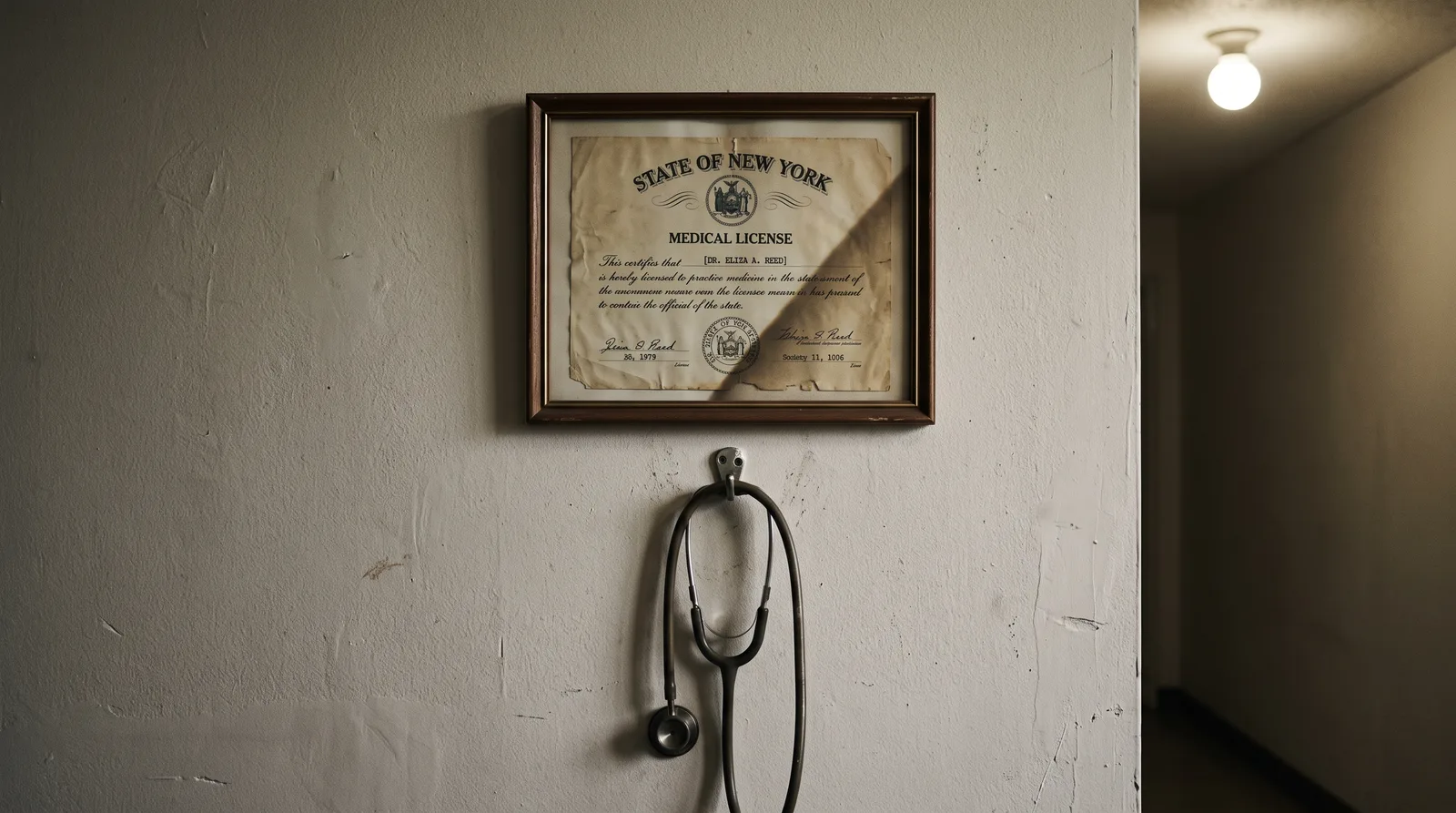
If you're an international medical student and someone just dropped the acronym "USMLE" in a conversation, I get it — it can feel like you've walked into the middle of a movie with no subtitles. Let me rewind it for you from the very beginning.
What USMLE Actually Stands For
USMLE stands for the United States Medical Licensing Examination. It's a three-part exam series that every physician — regardless of where they went to medical school — must pass in order to obtain a medical license and practice medicine in the United States.
That last part is important: every physician. U.S. medical graduates take it. You, as an international medical graduate (IMG), take it. It's the common standard the U.S. uses to assess that anyone calling themselves a licensed doctor has a baseline level of medical knowledge and clinical skill.
Why It Exists (And Why You Should Care)
The USMLE exists because the U.S. doesn't automatically recognize a medical degree earned in another country as equivalent to a U.S. degree. Before any state grants you a license to practice, it wants assurance that you can think clinically, apply basic science, and manage patients safely. The USMLE is how that gets proven — on paper, to everyone who will ever evaluate your application.
More practically: your USMLE scores are one of the first things a residency program looks at when reviewing your application. They're a filter before anyone reads your personal statement or glances at your letters of recommendation. Understanding the exam isn't optional — it's foundational.
The Three Steps, Explained Simply
Step 1: The Science Behind the Medicine
Step 1 tests the basic biomedical sciences — think anatomy, physiology, pharmacology, pathology, biochemistry, microbiology, and immunology. The questions are clinical vignettes, but what they're really probing is whether you understand why a disease happens, how a drug works at the molecular level, and what the underlying mechanism is.
As of 2022, Step 1 is reported as pass/fail — no numeric score. This was a significant policy change, and it shifts more weight onto Step 2 CK for residency program rankings. You still have to pass it, and you have to pass it before you can move forward in the pathway.
When do IMGs take it? Most take it during or after their final years of medical school, once they've completed core basic science coursework. You'll need to be registered with ECFMG (the Educational Commission for Foreign Medical Graduates) first — that's your gateway to the USMLE as an IMG.
Step 2 CK: Clinical Knowledge in Action
CK stands for Clinical Knowledge. This exam tests whether you can actually manage patients — diagnosis, treatment, prognosis, prevention, and professionalism. The vignettes get longer and more complex. You're expected to think like a physician who's about to see a patient, not just recall a fact.
Step 2 CK is still reported as a numeric score, typically on a scale where 200 is passing and scores in the 240s and above are considered competitive for most specialties. This number will follow your residency application everywhere.
When do IMGs take it? Generally after completing clinical rotations. Many IMGs take it while completing U.S. clinical experience, which itself is a strategic step in the pathway.
Step 3: The Final Gate to Independent Practice
Step 3 tests your readiness to practice medicine without supervision. It includes a section called the CCS — Computer-based Case Simulations — where you actually manage a patient's case in real time, ordering tests, adjusting treatment, and responding to changes in their condition.
Most IMGs take Step 3 after matching into residency, during their first year (internship year). Some take it before applying, but it's less common and usually situational.
Passing Step 3 is required to obtain a full, unrestricted medical license in any U.S. state.
How the Steps Fit Into the Bigger Pathway
Here's the sequence that matters:
- Obtain ECFMG certification (which requires passing Step 1 and Step 2 CK, among other requirements)
- Gain U.S. clinical experience and research exposure
- Apply to residency through ERAS (the Electronic Residency Application Service)
- Match into a program through the National Resident Matching Program (NRMP)
- Complete residency
- Pass Step 3 and apply for state licensure
The USMLE isn't a single event — it's a thread woven through your entire U.S. physician journey.
Where to Go from Here
Knowing what the USMLE is and knowing how to prepare for it strategically as an IMG are two very different things. The test content, the scoring, the timing relative to your other application components — all of it requires a plan built around your specific situation.
If you want the full picture — ECFMG, USMLE strategy, U.S. clinical experience, research, and Match — that's exactly what I walk you through inside the LATIMGS Academy Online Program. And if you want a fast, clear overview of how the entire U.S. physician pathway fits together before you commit to anything, the U.S. Med Pathway mini-course was built for exactly this moment in your journey.
You're not behind. You just needed the map. Now you have a piece of it.

Want to go deeper than a blog post?
U.S. Medical Career Starter
A beginner-friendly mini-course that demystifies the U.S. medical system for international medical students — covering the USMLE process, residency pathway, and your very first steps, all in under 90 minutes.
Start learning — $49.99 · 30 days access