
5 Costly Mistakes IMGs Make When Applying to U.S. Residency (And How to Avoid Them)
LALATIMGS Academy Blog · September 23, 2026 · 4 min read
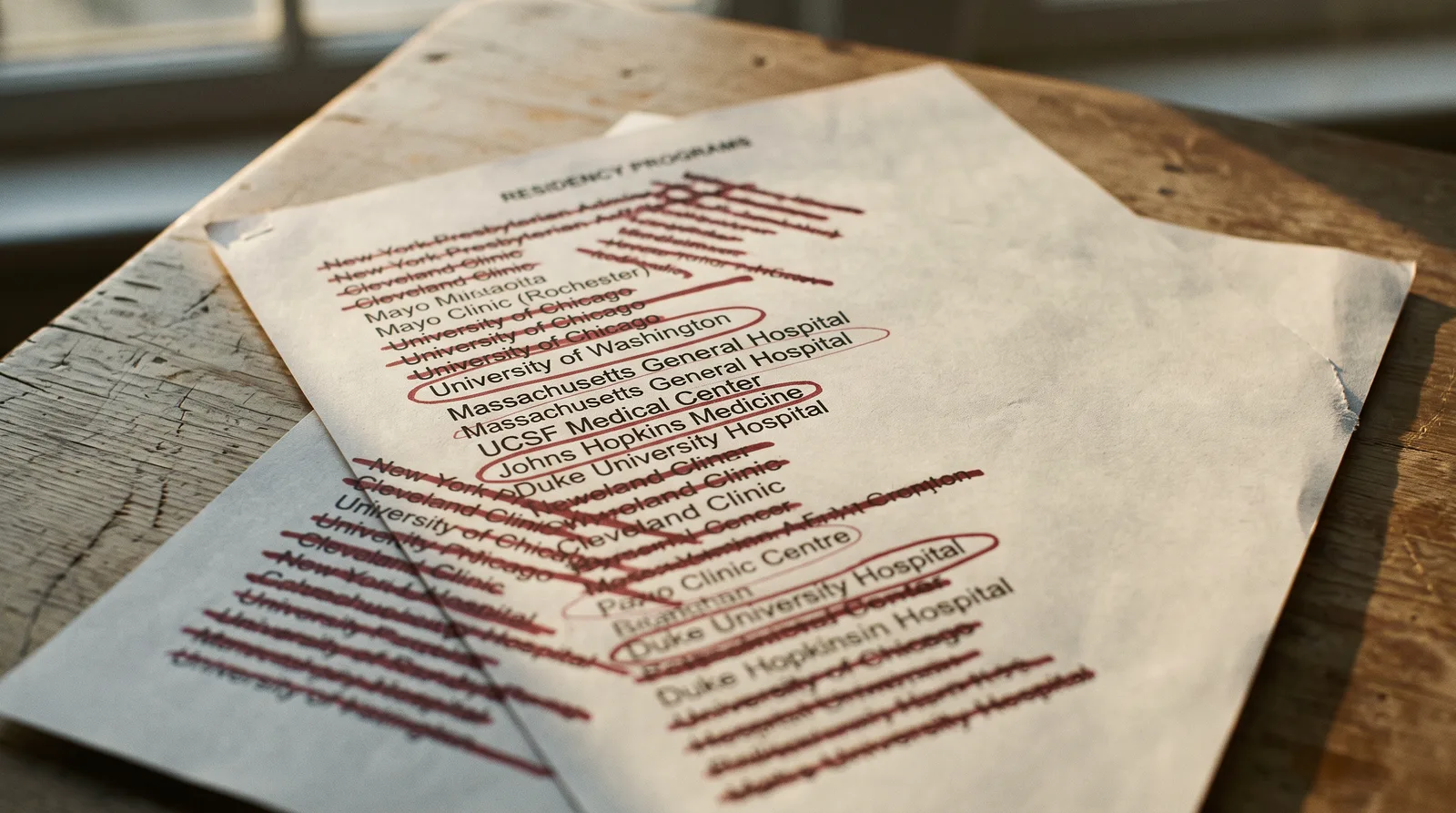
The residency application cycle moves fast, and the margin for error as an IMG is razor-thin. You can have solid USMLE scores, a genuine passion for medicine, and real clinical experience — and still watch the cycle close without a single interview invite, simply because of how you applied.
These aren't rare edge cases. They're patterns. And the good news is that every one of them is fixable — some even mid-cycle.
Mistake #1: Applying to Prestige Programs Instead of IMG-Friendly Programs
This one stings to say out loud, but it has to be said: not every residency program reviews IMG applications with the same openness. Some programs have matched IMGs consistently for years. Others — often the most recognizable academic centers — have near-zero IMG representation in their match history.
FREIDA (the AMA's residency database) lets you filter programs by the percentage of IMGs in their current resident roster. Use it. A program that has matched 30–40% IMGs in recent years is sending you a clear signal. One with 0% over five years is also sending you a signal — and that signal is not about your qualifications.
Targeting IMG-friendly programs isn't settling. It's strategy.
Mistake #2: Applying Too Broadly — Without a Real List
There's a persistent myth that submitting to more programs automatically improves your odds. It doesn't. Applying to 150 programs without a curated, researched list is expensive (ERAS fees add up fast), and it often results in a weak, generic application sent everywhere rather than a strong, tailored one sent to the right places.
The better move: build a tiered list. Identify your reach programs, your realistic targets, and your safety programs — all within the IMG-friendly pool. For each tier, understand what makes that program a fit for you specifically. That clarity will show up in your personal statement and interview answers in ways that matter.
Quality of list beats quantity of applications.
Mistake #3: A Personal Statement That Reads Like a CV in Paragraph Form
Program directors read thousands of personal statements. What stands out is not a chronological summary of your medical education — they already have your CV. What stands out is a clear, specific answer to an unspoken question: Why this specialty, why the U.S., and why are you ready?
IMGs carry a genuinely compelling story: training in a different healthcare system, often with fewer resources and broader patient exposure. That context is an asset — but only if you name it directly and connect it to what you'll bring to a U.S. residency program.
One concrete way to test your statement: read it aloud and ask yourself whether a sentence is doing one of three jobs — establishing your motivation, demonstrating your readiness, or showing self-awareness. If a sentence isn't doing at least one of those, cut it.
Mistake #4: Neglecting U.S. Clinical Experience (or Not Framing It Correctly)
USCE — U.S. Clinical Experience — is not just a checkbox. It's evidence that you can function inside a U.S. hospital system, communicate with American patients and staff, and adapt to a different workflow. For IMGs, it's often the difference between a screened-out application and an interview invite.
If your USCE is limited, be strategic about framing what you do have. A rotation in a U.S. outpatient clinic still demonstrates adaptability. A research position at a U.S. institution shows you've navigated American academic medicine. Letters of recommendation from U.S.-based physicians carry disproportionate weight — pursue them deliberately, not as an afterthought.
If you're pre-application and have time, prioritize getting at least one meaningful U.S. clinical experience before the cycle opens.
Mistake #5: Treating the Application as a One-Time Submission
ERAS opens, you submit, and then you wait. That's how a lot of IMGs approach it — and it's a mistake. The cycle is alive until Match Day, and there are real moves you can make during it.
If interviews are slow to arrive by late October, that's a signal to reassess your program list. Can you add programs? Is your personal statement doing the work it needs to do? Are there gaps in your application that a brief update or an additional letter could address?
Also: second-look visits (when programs offer them), thank-you emails after interviews, and even a well-timed Letter of Interest to your top programs all keep you visible and signal genuine interest. Programs do notice.
The U.S. residency path for IMGs is demanding — but it is navigable, and it rewards people who understand the process well enough to make deliberate decisions at every step.
If you're still building your foundation — ECFMG certification, USMLE strategy, figuring out where you even stand — my free LATIMGS Starter Guide walks you through the full pathway in seven focused lessons, so you can stop guessing and start planning. And if you're ready to go deeper, LATIMGS Academy gives you the complete step-by-step roadmap from certification through Match and licensure.
You don't have to figure this out alone. Start with what you know, fix what you can, and keep moving.

Want to go deeper than a blog post?
LATIMGS Academy Online Program
A practical, step-by-step education platform for international medical students and graduates navigating the U.S. physician pathway, from ECFMG certification and USMLE to research, U.S. clinical experience, ERAS, Match, licensure, and career pathways beyond residency.
Start learning — $997/yr