
What Is ECFMG Certification? A Beginner's Guide for International Medical Graduates
LALATIMGS Academy Blog · September 23, 2026 · 4 min read
If you trained in medicine outside the United States and you want to practice here, ECFMG certification is not optional. It is the gatekeeper. Every residency program in the U.S. requires it, every licensing board references it, and ERAS — the application system you'll use to apply to residency — won't let you submit without it.
The problem is that most international medical graduates first hear the acronym and assume it's one exam or one form. It isn't. It's a checklist, and every box has to be checked before the Educational Commission for Foreign Medical Graduates (ECFMG) will issue your certificate. Let me walk you through each requirement so you know exactly what you're working toward.
What ECFMG Actually Is
The ECFMG is a U.S. nonprofit organization whose job is to verify that IMGs meet the educational and examination standards required to enter accredited residency training in the United States. Think of ECFMG certification as the official stamp that says: this person is who they say they are, trained where they say they trained, and has passed the exams U.S. medical graduates are required to pass.
Without it, you cannot enter the Match, you cannot obtain a training visa, and in most states you cannot hold an unrestricted medical license.
Requirement 1: Medical School Credentials
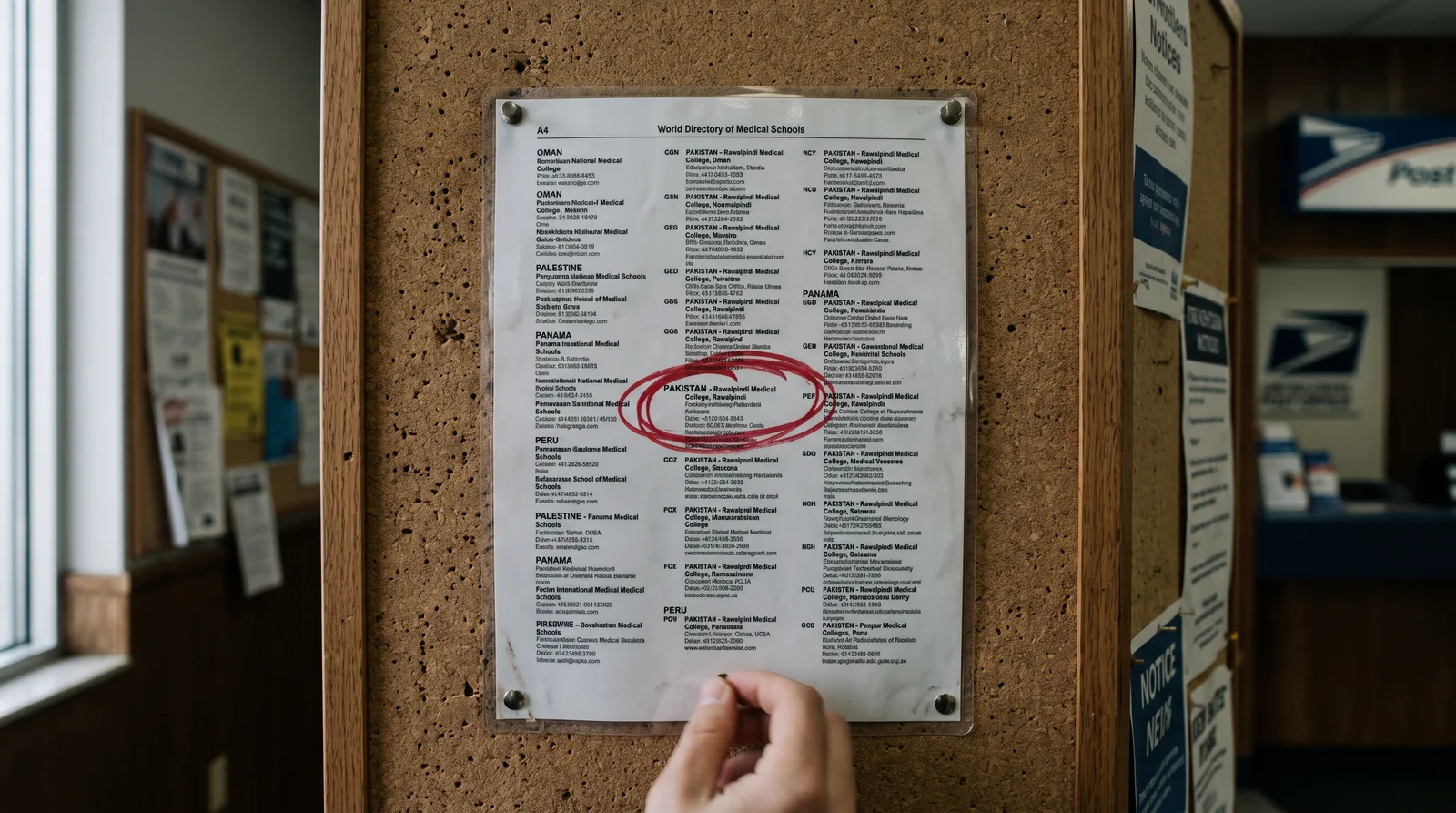
ECFMG will verify that your medical school is listed in the World Directory of Medical Schools with a notation that ECFMG accepts graduates from that institution for the years you were enrolled. This is something you need to check before you go any further — not every medical school in the world qualifies.
Once you confirm your school is listed, you'll need to submit your final medical school diploma and your official medical school transcript directly through ECFMG's online system, OASIS. Your school sends these documents; you don't mail them yourself. ECFMG contacts your institution to authenticate them, a process that can take weeks or months depending on your school's responsiveness.
Practical tip: Start this step early. Document delays are one of the most common reasons IMG timelines slip.
Requirement 2: USMLE Step 1 and Step 2 CK
To earn ECFMG certification, you must pass both USMLE Step 1 and USMLE Step 2 CK (Clinical Knowledge). That's it — Step 3 is not required for ECFMG certification, though most IMGs take it before or during residency.
A few things to know:
- There is no minimum score required for ECFMG certification — you only need to pass.
- However, your scores matter enormously for residency competitiveness. Passing is the floor, not the goal.
- You must register for USMLEs through ECFMG (not the NBME directly), because ECFMG is your "sponsoring entity" as an IMG.
- You are allowed a limited number of attempts per Step, so preparation matters.
Step 2 CS (Clinical Skills) was permanently discontinued in 2021, so you do not need to worry about that exam.
Requirement 3: ECFMG Application and OASIS
Everything is managed through OASIS, ECFMG's online portal. You'll create an account, submit your application, pay fees, upload documents, track credential verification, and register for exams — all in one place. Familiarize yourself with it early. It's not the most intuitive system, but once you understand how it's structured, it becomes manageable.
Your ECFMG ID number, assigned when you first apply, follows you for the rest of your U.S. medical career. Keep it accessible.
Requirement 4: Pathway to Certification — Medical Education Credential Verification
In recent years, ECFMG introduced what are called Pathways — structured options for verifying that your medical education meets certain standards. The relevant pathway for most IMGs is one that confirms your medical school program meets ECFMG's requirements through an approved accreditation or attestation process.
Which Pathway applies to you depends on your school and graduation year. Log into OASIS and review the current Pathway options carefully, because ECFMG updates these periodically.
When Is ECFMG Certification Officially Granted?
ECFMG issues your certificate once all of the following are true:
- Your medical school credentials have been verified and accepted.
- You have passed both USMLE Step 1 and Step 2 CK.
- Your application is complete and all fees are paid.
- You have met the applicable Pathway requirement.
That's the full list. No surprises, no hidden steps — just all four boxes checked.
What ECFMG Certification Does Not Mean
It doesn't mean you're licensed to practice medicine in any U.S. state. It doesn't guarantee residency. It doesn't replace the state licensure process you'll go through after residency. ECFMG certification is specifically the credential that makes you eligible to train — it's the starting line, not the finish line.
Your Next Step
Now that you know what ECFMG certification requires, the most valuable thing you can do is audit your own situation: Is your medical school listed in the World Directory? What is your current exam status? Have you created your OASIS account?
If you want a guided walkthrough of how these pieces fit into the full U.S. physician pathway — including USMLE strategy, residency application timelines, and what to do based on where you are right now — the LATIMGS Starter Guide is a free 7-lesson orientation built exactly for this moment. It's where a lot of IMGs go from overwhelmed to clear on their next move.

Want to go deeper than a blog post?
Research Opportunities
A focused, 45–60 minute mini-course that teaches international medical graduates and students exactly how to find, evaluate, and land U.S. research positions — without the fluff. Skip the cold-start confusion and reach out to PIs with confidence.
Start learning — $49 · 30 days access